
Wirtualny spacer

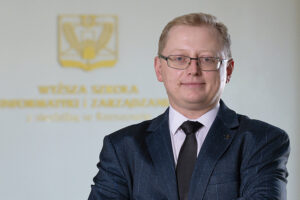
Dr hab. Konrad Szocik, prof. WSIiZ

Profesor Uczelni w Katedrze Nauk Społecznych Wyższej Szkoły Informatyki i Zarządzania z siedzibą w Rzeszowie.

Związany z WSIiZ od 2014 roku. W latach 2024–2026 pełnił funkcję prorektora ds. nauki i współpracy międzynarodowej.

Visiting researcher at the Yale Interdisciplinary Center for Bioethics, Institution for Social and Policy Studies (ISPS), Yale University, USA (2021–2022).

Doktor nauk humanistycznych w zakresie filozofii (Uniwersytet Jagielloński w Krakowie, 2013) oraz doktor habilitowany w dyscyplinie filozofia (Uniwersytet Łódzki, 2024). 

Specjalizuje się w bioetyce, etyce i filozofii eksploracji kosmosu, filozofii feministycznej, etyce reprodukcyjnej i populacyjnej oraz filozofii antynatalizmu. Jego obecne badania koncentrują się przede wszystkim na etycznych konsekwencjach długotrwałej obecności człowieka poza Ziemią, w szczególności na problemach reprodukcji i płodności, medycyny kosmicznej, ludzkiego ulepszania i modyfikacji biologicznych, nierówności i wykluczenia oraz moralnego statusu przyszłych pokoleń. Zajmuje się także bioetyką środowiskową, etyką zmian klimatycznych oraz etyką nowych technologii i sztucznej inteligencji.

Od wielu lat prowadzi badania na styku filozofii, bioetyki i etyki załogowej eksploracji kosmosu. Analizuje m.in. moralne granice ingerencji w ludzki organizm w warunkach kosmicznych, etyczne aspekty reprodukcji i przyszłego osadnictwa pozaziemskiego, sprawiedliwość dostępu do eksploracji kosmosu, społeczne konsekwencje powstawania przyszłych społeczności kosmicznych oraz znaczenie perspektywy feministycznej dla bioetyki eksploracji kosmosu. Szczególne miejsce w jego badaniach zajmuje pytanie o to, w jakim zakresie ziemskie kategorie etyczne i bioetyczne mogą być stosowane do warunków długotrwałych misji kosmicznych i przyszłego życia poza Ziemią.

Jest autorem i współautorem ponad 200 publikacji naukowych, obejmujących książki, artykuły, rozdziały i komentarze naukowe. Znaczna część jego dorobku ukazała się w międzynarodowym obiegu anglojęzycznym. Publikował m.in. w Science, Bioethics, The American Journal of Bioethics, AJOB Neuroscience, Behavioral and Brain Sciences, Cambridge Quarterly of Healthcare Ethics, Medicine, Health Care and Philosophy, Monash Bioethics Review, npj Microgravity, Futures, Technological Forecasting and Social Change, Technology in Society, Space Policy, Acta Astronautica, International Journal of Astrobiology, AI & Society, Sustainability Science, Current Anthropology, Zygon, Theology and Science, World Futures, Science and Engineering Ethics, NanoEthics oraz The New Bioethics.

Jest autorem dwóch monografii opublikowanych przez Oxford University Press: The Bioethics of Space Exploration: Human Enhancement and Gene Editing in Future Space Missions (2023) oraz Feminist Bioethics in Space: Gender Inequality in Space Exploration (2024), a także autorem, redaktorem lub współredaktorem kilku książek wydanych przez Springer. Wybrane redagowane przez niego monografie zostały przetłumaczone na język chiński przez China Astronautics Publishing House.

W latach 2021–2022 prowadził badania na Yale University jako stypendysta programu im. Bekkera Narodowej Agencji Wymiany Akademickiej. W latach 2019–2022 był stypendystą Ministra Nauki i Szkolnictwa Wyższego dla wybitnych młodych naukowców. Jest kierownikiem dwóch projektów badawczych finansowanych przez Narodowe Centrum Nauki: „Bioetyka eksploracji kosmosu” (OPUS 21, 2022–2025, 157 680 zł) oraz „Antynatalistyczna bioetyka i przyszłość ludzkości” (OPUS 27, 2025–2028, 240 000 zł).

W listopadzie 2025 roku otrzymał Nagrodę Naukową im. Tadeusza Kotarbińskiego Wydziału I Nauk Humanistycznych i Społecznych Polskiej Akademii Nauk w obszarze filozofii za monografię Feminist Bioethics in Space: Gender Inequality in Space Exploration.

Wyniki swoich badań prezentował podczas konferencji, seminariów i wykładów w Stanach Zjednoczonych, Wielkiej Brytanii, Japonii, Francji, Holandii, Norwegii, Włoszech, Szwajcarii i Szwecji. Występował m.in. w ramach wydarzeń organizowanych lub współorganizowanych przez Yale University, University of Oxford, Massachusetts General Hospital, Harvard Kennedy School, Northwestern University i University of Toronto, a także przez międzynarodowe organizacje zajmujące się bioetyką, astrobiologią, filozofią nauki i eksploracją kosmosu.

Obecnie rozwija przede wszystkim badania nad relacjami między bioetyką reprodukcyjną, antynatalizmem i przyszłością człowieka w kosmosie. Analizuje m.in. cele i granice medycyny kosmicznej, etyczny status ochrony płodności podczas lotów kosmicznych, moralne znaczenie reprodukcji w przyszłych osadach pozaziemskich oraz napięcia między przetrwaniem gatunku, autonomią reprodukcyjną i dobrostanem przyszłych osób.

Autor The Bioethics of Space Exploration opublikowanej przez Oxford University Press w 2023 roku.

Autor Feminist Bioethics in Space: Gender Inequality in Space Exploration opublikowanej przez Oxford University Press w 2024 roku.

Współautor, wraz z Hansem Van Eyghenem, Revising Cognitive and Evolutionary Science of Religion: Religion as an Adaptation, opublikowanej przez Springer w 2021 roku.

Redaktor serii wydawniczej Springer New Approaches to the Scientific Study of Religion.


Pełny wykaz publikacji i aktualne informacje o dorobku naukowym:

ORCID | Scopus | ResearchGate

Wybrane książki

Szocik, K. 2024. Feminist Bioethics in Space: Gender Inequality in Space Exploration. Oxford University Press.

Szocik, K. 2023. The Bioethics of Space Exploration: Human Enhancement and Gene Editing in Future Space Missions. Oxford University Press.

Szocik, K., & Van Eyghen, H. 2021. Revising Cognitive and Evolutionary Science of Religion: Religion as an Adaptation. Springer.

Rappaport, M. B., & Szocik, K. (eds.). 2021. The Human Factor in the Settlement of the Moon: An Interdisciplinary Approach. Springer.

Szocik, K. (ed.). 2020. Human Enhancements for Space Missions: Lunar, Martian, and Future Missions to the Outer Planets. Springer.

Szocik, K. (ed.). 2019. The Human Factor in a Mission to Mars: An Interdisciplinary Approach. Springer.

Wybrane artykuły naukowe

Balistreri, M., & Szocik, K. 2026. “Technologized Reproduction in Space: A Space-Bioethical Case for Assisted Procreation.” Bioethics 40(6): 582–588.

Szocik, K. 2026. “Why Antinatalism and Procreative Beneficence Do Not Mix.” Bioethics 40(4): 406–412.

Rees, W. E., & Szocik, K. 2026. “Overshoot and Procreative Ethics: At an Ecological Crossroads.” Sustainability Science 21(4): 1561–1575.

Szocik, K., & Abylkasymova, R. 2025. “The Bioethics of Biomodification for the Future of Space Exploration: Evaluating Insights from Feminist and Non-Feminist Approaches.” Futures 174: 103694.

Szocik, K. 2025. “Medical Ethics of Spaceflight Should Be Based on Ethical Theories and Include the Non-Ethical Context.” npj Microgravity 11: 74.

Szocik, K., MacKay, M., & Mason, C. E. 2024. “A Case for the Moral Duty of Specific Human Germline Genetic Engineering.” International Journal of Astrobiology 23: e17.

Szocik, K., & Reiss, M. J. 2022. “The Final Frontier: What Is Distinctive about the Bioethics of Space Missions? The Cases of Human Enhancement and Human Reproduction.” Monash Bioethics Review.

Szocik, K. 2021. “The Biologically Optimized Spacefarer.” Science 372(6541): 469.

Szocik, K. 2021. “Space Bioethics: Why We Need It and Why It Should Be a Feminist Space Bioethics.” Bioethics 35(2): 187–191.

Szocik, K., Shelhamer, M., Braddock, M., Cucinotta, F. A., Impey, C., Worden, P., Peters, T., Ćirković, M. M., Smith, K. C., Tachibana, K., Reiss, M., Norman, Z., Gouw, A. M., & Munévar, G. 2021. “Future Space Missions and Human Enhancement: Medical and Ethical Challenges.” Futures 133: 102819.

Szocik, K. 2019. “Should and Could Humans Go to Mars? Yes, but Not Now and Not in the Near Future.” Futures 105: 54–66.

Szocik, K., Elias Marques, R., Abood, S., Lysenko-Ryba, K., Minich, D., & Kędzior, A. 2018. “Biological and Social Challenges of Human Reproduction in a Long-Term Mars Base.” Futures 100: 56–62.

Wybrane wystąpienia naukowe

2026 – Massachusetts General Hospital, Boston, USA. Invited lecture: “Standard of Care and Bioethics in Multinational Human Spaceflight Missions,” The Ether Dome; wydarzenie organizowane przez Belfer Center for Science and International Affairs, Harvard Kennedy School, oraz SPEARMed, Mass General Brigham.

2025 – Northwestern University, Evanston, USA. IEEE International Symposium on Ethics in Engineering, Science, and Technology (ETHICS 2025): “Future Human Space Missions and the Procreative Ethics: Between Human Enhancement and Antinatalism.”

2024 – Chiba University, Japonia. “Humanities in the Age of Space Exploration”: “Can We Do More in Space than on Earth? A Feminist Perspective on the Bioethics of Space Exploration.”

2024 – Kiruna, Szwecja. “Social and Ethical Frontiers in Space Exploration,” European Astrobiology Institute and Society for Social and Conceptual Issues in Astrobiology: “Between the Horrible and the Unimaginable: Procreative Ethics in Future Space Settlement.”

2022 – Yale Interdisciplinary Center for Bioethics, Yale University, USA (online). Yale Technology and Ethics Working Research Group: “The Feminist Bioethics of Space Exploration.”

2022 – University of Toronto, Kanada (online). “Interstellar Health: Medicine to New Heights”: “Emerging and Future Trends in Space Medicine.”

2018 – University of Oxford, Wielka Brytania. Ian Ramsey Centre Summer Conference “Transhumanism, Posthumanism and Super-Naturalism”: “Manned Mission to Mars, Transhumanism, and Human Enhancement.”

Zapowiedziany wykład

2 grudnia 2026 – Uehiro Oxford Institute, University of Oxford, Wielka Brytania. Space Ethics Seminar: “Should Space Medicine Protect Fertility? Reproductive Health, Reproductive Capacity, and the Goals of Medicine Beyond Earth.”

Prowadzone przedmioty:

Współczesna kultura informacyjna, filozofia, filozofia stosowana, etyka, socjologia, bezpieczeństwo i higiena cyfrowa, wstęp do socjologii, etyka biznesu a zrównoważony rozwój, critical thinking, etyka w psychologii. 

Materiały dla studentów dostępne są na platformie Moodle.


https://www.businessinsider.com/wed-probably-have-to-genetically-transform-our-bodies-to-survive-elon-musks-mars-colony-2017-3?IR=T

https://www.dailymail.co.uk/sciencetech/article-4309524/Mars-colonists-rapidly-evolve-separate-species.html

https://futurism.com/to-colonize-mars-humans-need-to-evolve

https://blogs.scientificamerican.com/observations/captain-america-on-mars/

https://www.livescience.com/58229-mars-colonists-need-to-alter-body-mind.html

https://www.sciencealert.com/we-ll-probably-have-to-genetically-augment-our-bodies-to-survive-mars

https://www.inverse.com/article/38069-mars-colonies-space-religion-konrad-szocik

https://www.seeker.com/colonizing-mars-might-require-humans-to-radically-alter-their-bodies-a-2304346104.html

https://www.polsatnews.pl/wiadomosc/2016-06-23/mozliwosci-kolonizacji-marsa-badaja-je-naukowcy-z-rzeszowskiej-uczelni/

https://archiwum.radiozet.pl/Wiadomosci/Kraj/Czlowiek-na-Marsie-Kolonizacja-ryzykowna-00024521

https://wiadomosci.onet.pl/rzeszow/pomysl-kolonizacji-marsa-rzeszowskich-naukowcow-wywoluje-zainteresowanie-na-swiecie/nejcxks

https://www.nouvelobs.com/sciences/20180605.OBS7724/sterilite-eugenisme-faire-des-enfants-sur-mars-ne-sera-pas-si-simple.html

https://www.online.no/bredband/ny-sesong-av-mars/

https://zeenews.india.com/space/humans-could-colonise-mars-in-future-say-experts_1986557.html

https://gizmodo.com/will-humans-have-to-upgrade-their-bodies-to-survive-on-1793236286

https://nypost.com/2017/03/14/mars-eventual-colonists-might-become-new-species/

https://www.donanimhaber.com/Mars-kolonisi-icin-insan-zihninin-ve-vucudunun-degistirilmesi-gerekebilir–89861

https://theweek.com/articles/808840/colonization-space

https://www.sciencetimes.com/articles/10290/20170314/mars-colonizers-should-modify-human-body-alter-emotions-to-survive-interplanetary-isolation.htm

https://crm.org/articles/how-to-build-a-team-that-can-survive-on-mars

http://natgeobloggen.no/da/2018/11/02/derfor-bliver-det-vanskeligt-at-foede-paa-mars/

http://planetawiedzy.pl/369513,Polscy-naukowcy-zbadaja-czy-mozna-skolonizowac-Marsa.html

https://www.techtimes.com/articles/201449/20170314/colonizing-mars-scientists-claim-future-colonies-will-need-superhuman-senses-to-adapt-to-the-harsh-environment.htm

http://trendintech.com/2017/03/24/theres-still-a-long-way-to-go-before-humans-can-successfully-colonize-on-mars/

https://www.resinet.pl/aktualnosci/rzeszow/rzeszowscy-naukowcy-maja-pomysl-na-kolonizacje-marsa.html

https://rzeszow.studentnews.pl/s/56/42047-NEWSY-Rzeszow-i-podkarpackie/4085954-Naukowcy-z-WSIiZ-zbadaja-mozliwosc-kolonizacji-Marsa.htm

https://www.ekologia.pl/ciekawostki/czy-zamieszkamy-kiedys-na-marsie,21827.html

http://naukawpolsce.pap.pl/aktualnosci/news%2C410255%2Cnaukowcy-z-rzeszowskiej-uczelni-badaja-mozliwosci-kolonizacji-marsa.html

https://www.firstpost.com/tech/news-analysis/scientists-want-to-colonise-mars-with-enhanced-human-beings-3699273.html

https://www.thedailybeast.com/having-babies-on-mars-is-going-to-be-a-titanic-challenge

https://filling-space.com/2019/04/05/religion-and-space-colonization/

https://novini247.com/novini/polskiyat-filosof-konrad-shotsik-be-seriozno-kritikuvan-ot-svoite-kolegi_390356.html

https://naukatv.ru/articles/759

https://hightech.fm/2017/11/07/space-religion

https://news.rambler.ru/other/44067049-kak-budet-vyglyadet-chelovek-prisposoblennyy-dlya-zhizni-na-marse/

https://moya-planeta.ru/news/view/uchenye_rasskazali_o_vozmozhnym_slozhnostyah_zhizni_na_marse_29168/?&loaded_pages_count=1

https://www.ridus.ru/news/264918

https://hi-news.ru/research-development/filosof-kolonisty-na-marse-ne-vyzhivut-bez-religii.html

https://crm.org/articles/how-to-build-a-team-that-can-survive-on-mars

https://indianexpress.com/article/technology/science/enhanced-humans-could-colonise-mars-study-4568780/

https://up-magazine.info/espace/8682-les-humains-envoyes-sur-mars-evolueront-inevitablement-vers-une-nouvelle-espece/

Will A Mars Colony Need Religion For Survival? Scientist Says Yes

Mars trotting astronauts will require radical human enhancements

Psychika Marsjanina

https://www.inquisitr.com/4062574/life-on-mars-might-require-enhanced-humans-altering-bodies-and-minds-to-survive/
На Марсе появится новый вид человека

dr hab. Konrad Szocik, prof. WSIiZ

DANE KONTAKTOWE

Dr hab. Konrad Szocik, prof. WSIiZ
e-mail: kszocik@wsiz.edu.pl


KONSULTACJE

W semestrze zimowym 2026/2027:

Poniedziałek, godz. 9:30-11:30, RA210.


University Professor at the Department of Social Sciences, University of Information Technology and Management in Rzeszow.

Affiliated with the University of Information Technology and Management in Rzeszow since 2014. From 2024 to 2026, he served as Vice-Rector for Research and International Cooperation.

Visiting researcher at the Yale Interdisciplinary Center for Bioethics, Institution for Social and Policy Studies (ISPS), Yale University, USA (2021–2022).

He received his PhD in Philosophy from Jagiellonian University in Krakow in 2013 and his habilitation in Philosophy from the University of Lodz in 2024. He is the faculty advisor to the Feminist Philosophy Student Research Group.

His main research interests include bioethics, the ethics and philosophy of space exploration, feminist philosophy, reproductive and population ethics, and the philosophy of antinatalism. His current research focuses primarily on the ethical implications of long-term human presence beyond Earth, particularly issues related to reproduction and fertility, space medicine, human enhancement and biological modification, inequality and exclusion, and the moral status of future generations. He also works on environmental bioethics, the ethics of climate change, and the ethics of emerging technologies and artificial intelligence.

For many years, his research has developed at the intersection of philosophy, bioethics, and human spaceflight. He examines, among other issues, the moral limits of interventions in the human body in space environments, the ethics of reproduction and future extraterrestrial settlement, justice in access to space exploration, the social consequences of future space communities, and the importance of feminist perspectives for the bioethics of space exploration. A particular focus of his research is the extent to which Earth-based ethical and bioethical concepts can be applied to long-duration space missions and future human life beyond Earth.

He is the author or co-author of more than 200 academic publications, including books, journal articles, book chapters, and scholarly commentaries. A substantial part of his work has been published internationally in English. His articles have appeared in journals including Science, Bioethics, The American Journal of Bioethics, AJOB Neuroscience, Behavioral and Brain Sciences, Cambridge Quarterly of Healthcare Ethics, Medicine, Health Care and Philosophy, Monash Bioethics Review, npj Microgravity, Futures, Technological Forecasting and Social Change, Technology in Society, Space Policy, Acta Astronautica, International Journal of Astrobiology, AI & Society, Sustainability Science, Current Anthropology, Zygon, Theology and Science, World Futures, Science and Engineering Ethics, NanoEthics, and The New Bioethics.

In 2023, Oxford University Press published his monograph The Bioethics of Space Exploration: Human Enhancement and Gene Editing in Future Space Missions. The book grew out of research conducted at Yale University during a one-year research stay funded by the Bekker Programme of the Polish National Agency for Academic Exchange.

In 2024, Oxford University Press published his second monograph, Feminist Bioethics in Space: Gender Inequality in Space Exploration. The book develops a feminist approach to the bioethics of space exploration and is one of the principal outcomes of the research project “Bioethics of Space Exploration,” funded by the Polish National Science Centre.

He is also the editor or co-editor of The Human Factor in a Mission to Mars: An Interdisciplinary Approach (Springer, 2019), Human Enhancements for Space Missions: Lunar, Martian, and Future Missions to the Outer Planets (Springer, 2020), and The Human Factor in the Settlement of the Moon: An Interdisciplinary Approach (Springer, 2021). Together with Hans Van Eyghen, he is the author of Revising Cognitive and Evolutionary Science of Religion: Religion as an Adaptation (Springer, 2021). He is also an editor of the Springer book series New Approaches to the Scientific Study of Religion. Selected Springer volumes edited by him have been translated into Chinese by China Astronautics Publishing House.

From 2021 to 2022, he conducted research at Yale University as a fellow of the Bekker Programme of the Polish National Agency for Academic Exchange. From 2019 to 2022, he held a scholarship from the Polish Minister of Science and Higher Education for outstanding young researchers. He is the principal investigator of two research projects funded by the Polish National Science Centre: “Bioethics of Space Exploration” (OPUS 21, 2022–2025, PLN 157,680) and “Antinatalist Bioethics and the Future of Humanity” (OPUS 27, 2025–2028, PLN 240,000).

In November 2025, he received the Tadeusz Kotarbiński Scientific Award in Philosophy from Division I: Humanities and Social Sciences of the Polish Academy of Sciences for his monograph Feminist Bioethics in Space: Gender Inequality in Space Exploration.

He has presented his research at conferences, seminars, and invited lectures in the United States, the United Kingdom, Japan, France, the Netherlands, Norway, Italy, Switzerland, and Sweden. He has participated in events organized or co-organized by institutions including Yale University, the University of Oxford, Massachusetts General Hospital, Harvard Kennedy School, Northwestern University, and the University of Toronto, as well as by international organizations working in bioethics, astrobiology, philosophy of science, and space exploration.

His current research focuses particularly on the intersections of reproductive bioethics, antinatalism, and the human future in space. He examines, among other questions, the goals and limits of space medicine, the ethical status of fertility protection during spaceflight, the moral significance of reproduction in future extraterrestrial settlements, and tensions between species survival, reproductive autonomy, and the well-being of future persons.

Author of The Bioethics of Space Exploration, published by Oxford University Press in 2023.

Author of Feminist Bioethics in Space: Gender Inequality in Space Exploration, published by Oxford University Press in 2024.

Co-author, with Hans Van Eyghen, of Revising Cognitive and Evolutionary Science of Religion: Religion as an Adaptation, published by Springer in 2021.

Editor of the Springer book series New Approaches to the Scientific Study of Religion.


For a complete list of publications and up-to-date information on research output:

ORCID | Scopus | ResearchGate

Selected Books

Szocik, K. 2024. Feminist Bioethics in Space: Gender Inequality in Space Exploration. Oxford University Press.

Szocik, K. 2023. The Bioethics of Space Exploration: Human Enhancement and Gene Editing in Future Space Missions. Oxford University Press.

Szocik, K., & Van Eyghen, H. 2021. Revising Cognitive and Evolutionary Science of Religion: Religion as an Adaptation. Springer.

Rappaport, M. B., & Szocik, K. (eds.). 2021. The Human Factor in the Settlement of the Moon: An Interdisciplinary Approach. Springer.

Szocik, K. (ed.). 2020. Human Enhancements for Space Missions: Lunar, Martian, and Future Missions to the Outer Planets. Springer.

Szocik, K. (ed.). 2019. The Human Factor in a Mission to Mars: An Interdisciplinary Approach. Springer.

Selected Journal Articles

Balistreri, M., & Szocik, K. 2026. “Technologized Reproduction in Space: A Space-Bioethical Case for Assisted Procreation.” Bioethics 40(6): 582–588.

Szocik, K. 2026. “Why Antinatalism and Procreative Beneficence Do Not Mix.” Bioethics 40(4): 406–412.

Rees, W. E., & Szocik, K. 2026. “Overshoot and Procreative Ethics: At an Ecological Crossroads.” Sustainability Science 21(4): 1561–1575.

Szocik, K., & Abylkasymova, R. 2025. “The Bioethics of Biomodification for the Future of Space Exploration: Evaluating Insights from Feminist and Non-Feminist Approaches.” Futures 174: 103694.

Szocik, K. 2025. “Medical Ethics of Spaceflight Should Be Based on Ethical Theories and Include the Non-Ethical Context.” npj Microgravity 11: 74.

Szocik, K., MacKay, M., & Mason, C. E. 2024. “A Case for the Moral Duty of Specific Human Germline Genetic Engineering.” International Journal of Astrobiology 23: e17.

Szocik, K., & Reiss, M. J. 2022. “The Final Frontier: What Is Distinctive about the Bioethics of Space Missions? The Cases of Human Enhancement and Human Reproduction.” Monash Bioethics Review.

Szocik, K. 2021. “The Biologically Optimized Spacefarer.” Science 372(6541): 469.

Szocik, K. 2021. “Space Bioethics: Why We Need It and Why It Should Be a Feminist Space Bioethics.” Bioethics 35(2): 187–191.

Szocik, K., Shelhamer, M., Braddock, M., Cucinotta, F. A., Impey, C., Worden, P., Peters, T., Ćirković, M. M., Smith, K. C., Tachibana, K., Reiss, M., Norman, Z., Gouw, A. M., & Munévar, G. 2021. “Future Space Missions and Human Enhancement: Medical and Ethical Challenges.” Futures 133: 102819.

Szocik, K. 2019. “Should and Could Humans Go to Mars? Yes, but Not Now and Not in the Near Future.” Futures 105: 54–66.

Szocik, K., Elias Marques, R., Abood, S., Lysenko-Ryba, K., Minich, D., & Kędzior, A. 2018. “Biological and Social Challenges of Human Reproduction in a Long-Term Mars Base.” Futures 100: 56–62.

Selected Academic Presentations

2026 – Massachusetts General Hospital, Boston, USA. Invited lecture: “Standard of Care and Bioethics in Multinational Human Spaceflight Missions,” The Ether Dome; organized by the Belfer Center for Science and International Affairs at Harvard Kennedy School and SPEARMed, Mass General Brigham.

2025 – Northwestern University, Evanston, USA. IEEE International Symposium on Ethics in Engineering, Science, and Technology (ETHICS 2025): “Future Human Space Missions and the Procreative Ethics: Between Human Enhancement and Antinatalism.”

2024 – Chiba University, Japan. “Humanities in the Age of Space Exploration”: “Can We Do More in Space than on Earth? A Feminist Perspective on the Bioethics of Space Exploration.”

2024 – Kiruna, Sweden. “Social and Ethical Frontiers in Space Exploration,” European Astrobiology Institute and Society for Social and Conceptual Issues in Astrobiology: “Between the Horrible and the Unimaginable: Procreative Ethics in Future Space Settlement.”

2022 – Yale Interdisciplinary Center for Bioethics, Yale University, USA (online). Yale Technology and Ethics Working Research Group: “The Feminist Bioethics of Space Exploration.”

2022 – University of Toronto, Canada (online). “Interstellar Health: Medicine to New Heights”: “Emerging and Future Trends in Space Medicine.”

2018 – University of Oxford, United Kingdom. Ian Ramsey Centre Summer Conference “Transhumanism, Posthumanism and Super-Naturalism”: “Manned Mission to Mars, Transhumanism, and Human Enhancement.”

Upcoming Invited Lecture

2 December 2026 – Uehiro Oxford Institute, University of Oxford, United Kingdom. Space Ethics Seminar: “Should Space Medicine Protect Fertility? Reproductive Health, Reproductive Capacity, and the Goals of Medicine Beyond Earth.”

Conducted courses:

Philosophy, applied philosophy, aesthetics, ethics of media and communication, ethics in psychology, sociology, contemporary european culture.


https://www.businessinsider.com/wed-probably-have-to-genetically-transform-our-bodies-to-survive-elon-musks-mars-colony-2017-3?IR=T

https://www.dailymail.co.uk/sciencetech/article-4309524/Mars-colonists-rapidly-evolve-separate-species.html

https://futurism.com/to-colonize-mars-humans-need-to-evolve

https://blogs.scientificamerican.com/observations/captain-america-on-mars/

https://www.livescience.com/58229-mars-colonists-need-to-alter-body-mind.html

https://www.sciencealert.com/we-ll-probably-have-to-genetically-augment-our-bodies-to-survive-mars

https://www.inverse.com/article/38069-mars-colonies-space-religion-konrad-szocik

https://www.seeker.com/colonizing-mars-might-require-humans-to-radically-alter-their-bodies-a-2304346104.html

https://www.polsatnews.pl/wiadomosc/2016-06-23/mozliwosci-kolonizacji-marsa-badaja-je-naukowcy-z-rzeszowskiej-uczelni/

https://archiwum.radiozet.pl/Wiadomosci/Kraj/Czlowiek-na-Marsie-Kolonizacja-ryzykowna-00024521

https://wiadomosci.onet.pl/rzeszow/pomysl-kolonizacji-marsa-rzeszowskich-naukowcow-wywoluje-zainteresowanie-na-swiecie/nejcxks

https://www.nouvelobs.com/sciences/20180605.OBS7724/sterilite-eugenisme-faire-des-enfants-sur-mars-ne-sera-pas-si-simple.html

https://www.online.no/bredband/ny-sesong-av-mars/

https://zeenews.india.com/space/humans-could-colonise-mars-in-future-say-experts_1986557.html

https://gizmodo.com/will-humans-have-to-upgrade-their-bodies-to-survive-on-1793236286

https://nypost.com/2017/03/14/mars-eventual-colonists-might-become-new-species/

https://www.donanimhaber.com/Mars-kolonisi-icin-insan-zihninin-ve-vucudunun-degistirilmesi-gerekebilir–89861

https://theweek.com/articles/808840/colonization-space

https://www.sciencetimes.com/articles/10290/20170314/mars-colonizers-should-modify-human-body-alter-emotions-to-survive-interplanetary-isolation.htm

https://crm.org/articles/how-to-build-a-team-that-can-survive-on-mars

http://natgeobloggen.no/da/2018/11/02/derfor-bliver-det-vanskeligt-at-foede-paa-mars/

http://planetawiedzy.pl/369513,Polscy-naukowcy-zbadaja-czy-mozna-skolonizowac-Marsa.html

https://www.techtimes.com/articles/201449/20170314/colonizing-mars-scientists-claim-future-colonies-will-need-superhuman-senses-to-adapt-to-the-harsh-environment.htm

There’s Still A Long Way To Go Before Humans Can Successfully Colonize on Mars

https://www.resinet.pl/aktualnosci/rzeszow/rzeszowscy-naukowcy-maja-pomysl-na-kolonizacje-marsa.html

https://rzeszow.studentnews.pl/s/56/42047-NEWSY-Rzeszow-i-podkarpackie/4085954-Naukowcy-z-WSIiZ-zbadaja-mozliwosc-kolonizacji-Marsa.htm

https://www.ekologia.pl/ciekawostki/czy-zamieszkamy-kiedys-na-marsie,21827.html

http://naukawpolsce.pap.pl/aktualnosci/news%2C410255%2Cnaukowcy-z-rzeszowskiej-uczelni-badaja-mozliwosci-kolonizacji-marsa.html

https://www.firstpost.com/tech/news-analysis/scientists-want-to-colonise-mars-with-enhanced-human-beings-3699273.html

https://www.thedailybeast.com/having-babies-on-mars-is-going-to-be-a-titanic-challenge

https://filling-space.com/2019/04/05/religion-and-space-colonization/


https://antyweb.pl/marsjanscy-kolonisci-powinni-zmodyfikowac-swoje-organizmy/


Will A Mars Colony Need Religion For Survival? Scientist Says Yes


https://up-magazine.info/espace/8682-les-humains-envoyes-sur-mars-evolueront-inevitablement-vers-une-nouvelle-espece/


https://crm.org/articles/how-to-build-a-team-that-can-survive-on-mars

Mars trotting astronauts will require radical human enhancements


Psychika Marsjanina


https://indianexpress.com/article/technology/science/enhanced-humans-could-colonise-mars-study-4568780/

https://www.inquisitr.com/4062574/life-on-mars-might-require-enhanced-humans-altering-bodies-and-minds-to-survive/


https://novini247.com/novini/polskiyat-filosof-konrad-shotsik-be-seriozno-kritikuvan-ot-svoite-kolegi_390356.html

https://naukatv.ru/articles/759

https://hightech.fm/2017/11/07/space-religion

https://news.rambler.ru/other/44067049-kak-budet-vyglyadet-chelovek-prisposoblennyy-dlya-zhizni-na-marse/

https://moya-planeta.ru/news/view/uchenye_rasskazali_o_vozmozhnym_slozhnostyah_zhizni_na_marse_29168/?&loaded_pages_count=1

https://www.ridus.ru/news/264918

На Марсе появится новый вид человека

https://hi-news.ru/research-development/filosof-kolonisty-na-marse-ne-vyzhivut-bez-religii.html

dr hab. Konrad Szocik, prof. WSIiZ

Contact data

Dr hab. Konrad Szocik
e-mail: kszocik@wsiz.edu.pl
35-225 Rzeszów, Sucharskiego 2 St.
room RA 210


Office hours

In the spring semester of 2025/2026:
Monday, 9:00 a.m. to 11:00 a.m., RA210.


Wyższa Szkoła Informatyki i Zarządzania z siedzibą w Rzeszowie od lat wyznacza standardy nowoczesnego kształcenia. Łączymy wiedzę akademicką z praktyką, współpracujemy z biznesem i rozwijamy kompetencje, których naprawdę oczekuje rynek pracy. Nasi absolwenci szybko rozpoczynają kariery zawodowe, a studenci cenią WSIiZ za wysoką jakość nauczania, międzynarodowe środowisko i możliwości rozwoju już od pierwszego dnia studiów.

ul. mjr. Henryka Sucharskiego 2

35-225 Rzeszów

Telefon: 17 866 11 11

E-mail: wsiz@wsiz.edu.pl